Why the 30g Protein Rule Is a Game-Changer After 40
If you're over 40 and still obsessing over your daily calorie count, it's time to shift your focus. While calories matter for weight management, the timing and distribution of your protein intake can have a more profound impact on your muscle mass, metabolism, and overall longevity. This is where the 30g Protein Rule comes into play.
As we age, our bodies become less efficient at using dietary protein to build muscle—a phenomenon known as anabolic resistance. This means you need a higher-quality, better-timed protein intake to trigger muscle protein synthesis (MPS), the process that repairs and builds muscle tissue. The 30g Protein Rule is a simple, science-backed strategy to overcome this resistance and maximize your results.
The Science: Anabolic Resistance and Muscle Protein Synthesis
In your 20s and 30s, your body responds quickly to even small amounts of protein. But after 40, the signaling pathways that stimulate MPS become less sensitive. Studies show that while a 20g dose of protein might be enough for a younger person, a 40-something adult may need closer to 30-40g to achieve the same response. This is the core of anabolic resistance.
What Does 30g of Protein Look Like?
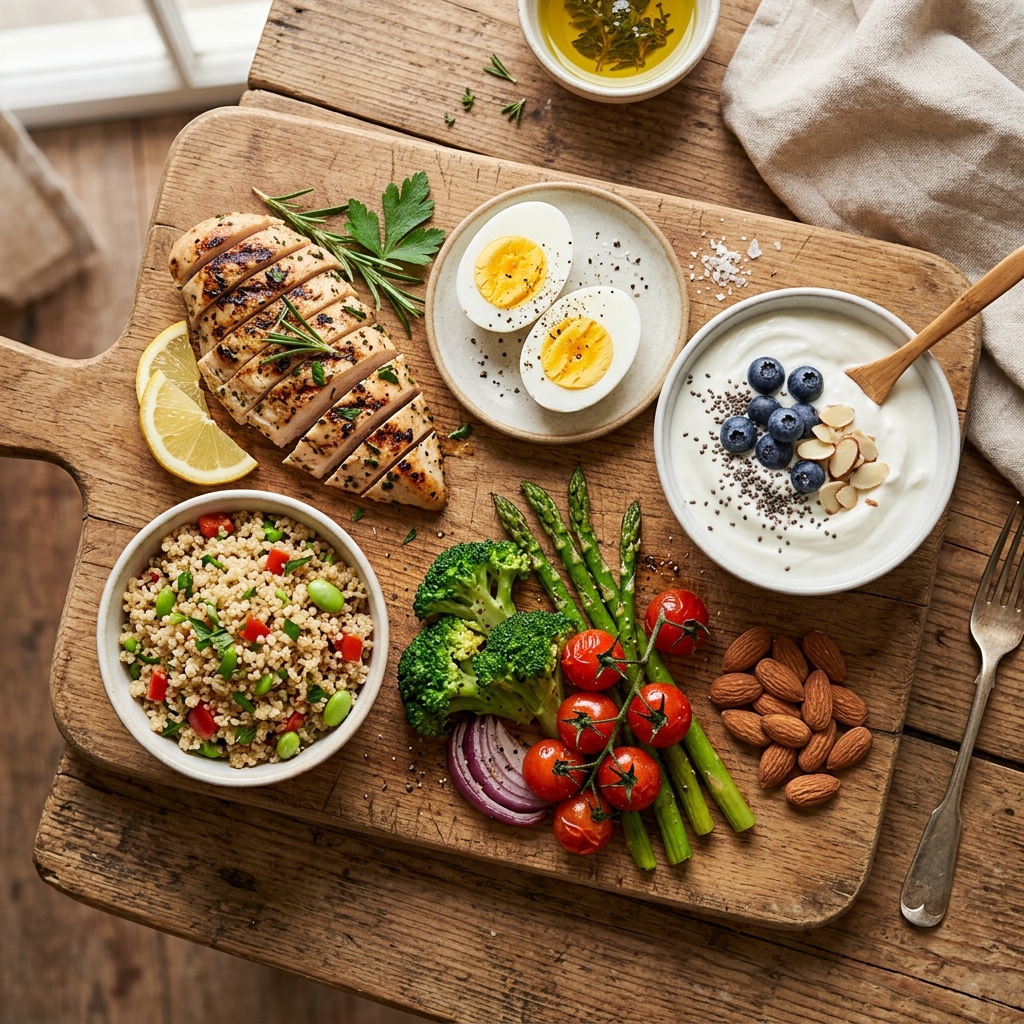
- 4-5 ounces of cooked chicken breast (about 30g)
- 1.5 cups of Greek yogurt (about 25g, add a handful of nuts)
- 1 scoop of whey protein powder + 1 cup of milk (about 30g)
- 6 ounces of salmon (about 35g)
- 3 large eggs + 1/2 cup of cottage cheese (about 30g)
Why Meal Timing Trumps Total Calories
When you eat protein matters just as much as how much you eat in a day. Your body doesn't store amino acids like it stores fat or carbohydrates. Instead, it relies on a steady supply from your diet. If you eat a 90g protein dinner but only 10g at breakfast and lunch, you're leaving muscle-building opportunities on the table.
By spreading your protein evenly across 3-5 meals, you maintain a constant elevated level of amino acids in your blood, which keeps MPS active throughout the day. This approach also helps regulate blood sugar, reduces cravings, and keeps you feeling fuller longer—making it easier to manage your weight without counting every calorie.
The 30g Rule in Action
- Breakfast: 30g protein (e.g., 3 eggs + spinach + cheese)
- Lunch: 30g protein (e.g., chicken salad with quinoa)
- Dinner: 30g protein (e.g., grilled fish with vegetables)
- Snack (optional): 15-20g protein (e.g., Greek yogurt or a protein shake)
This simple pattern provides a total of 90-110g of protein daily, which is ideal for most active adults over 40. It's not about hitting an arbitrary number—it's about consistency and timing.
Practical Steps to Implement the 30g Protein Rule
Ready to put this into practice? Here’s a step-by-step guide:
Step 1: Calculate Your Baseline
Start by tracking your current protein intake for 3 days. Most people find they eat a large dinner but little protein earlier in the day. This is your starting point.
Step 2: Aim for 30g at Breakfast
This is often the hardest meal to overhaul, but it's also the most impactful. A high-protein breakfast sets the tone for the day, stabilizes blood sugar, and primes your muscles for growth. Try a veggie omelet with feta cheese or a protein smoothie with spinach and berries.
Step 3: Make Lunch a Protein Priority
Instead of a sandwich or salad with minimal protein, build your lunch around a lean protein source. Think grilled chicken, tuna, tofu, or lentils. Aim for 30g—that's roughly the size of a deck of cards.
Step 4: Don't Neglect Dinner—But Don't Overload It
Dinner is where most people already get enough protein. The goal is to keep it at 30g, not 60g. This frees up room in your diet for other nutrients and prevents overeating late in the day.
Step 5: Use Supplements Wisely
If you struggle to hit 30g at a meal, a quality protein powder can help. Whey or plant-based blends are convenient and effective. For an extra edge, consider adding creatine monohydrate to your post-workout shake—it's one of the most researched supplements for muscle maintenance and performance.
Pro Tip: Keep a bag of protein powder at your desk or in your car. If you're short on time, mix a quick shake to hit your 30g target. Consistency beats perfection.
How the 30g Rule Supports Weight Management and Longevity
While the 30g rule is primarily about muscle, it has powerful secondary benefits. High-protein meals increase satiety, meaning you feel full and satisfied for longer. This naturally reduces your overall calorie intake without the need for strict counting.
Moreover, preserving muscle mass is directly linked to a faster metabolism. Muscle tissue burns more calories at rest than fat tissue. By maintaining your muscle through adequate protein and strength training, you keep your metabolism revved up, making it easier to maintain a healthy weight as you age.
The Hormonal Connection
Protein intake also influences hormone levels. Adequate protein supports the production of natural testosterone, which is crucial for muscle growth, energy, and libido. Additionally, a protein-rich diet helps stabilize insulin and cortisol, reducing stress on your body.
Common Mistakes to Avoid
- Eating all your protein at dinner: This is the most common mistake. Your body can only use so much at once; the rest is oxidized or stored as fat.
- Choosing low-quality proteins: Processed meats and high-fat cuts may not provide the same amino acid profile as lean sources. Aim for variety: chicken, fish, eggs, dairy, legumes, and plant-based options.
- Ignoring the rest of your diet: The 30g rule is not a free pass to eat junk. Pair your protein with fiber-rich vegetables, healthy fats, and complex carbs for a balanced plate.
Your 7-Day Meal Plan Template
Here’s a flexible template to get you started. Adjust portion sizes to fit your needs.
- Monday: Breakfast – Greek yogurt parfait (30g). Lunch – Turkey wrap with whole wheat tortilla (30g). Dinner – Baked cod with quinoa (30g).
- Tuesday: Breakfast – Protein smoothie (30g). Lunch – Chickpea salad with feta (30g). Dinner – Chicken stir-fry (30g).
- Wednesday: Breakfast – Cottage cheese with fruit (30g). Lunch – Tuna salad (30g). Dinner – Lean beef burgers (30g).
- Thursday: Breakfast – Veggie omelet (30g). Lunch – Leftover stir-fry (30g). Dinner – Shrimp skewers (30g).
- Friday: Breakfast – Protein pancakes (30g). Lunch – Grilled chicken Caesar (30g). Dinner – Salmon with sweet potato (30g).
- Saturday: Breakfast – Egg muffin cups (30g). Lunch – Quinoa bowl with black beans (30g). Dinner – Pork tenderloin (30g).
- Sunday: Breakfast – Chia pudding with protein powder (30g). Lunch – Turkey chili (30g). Dinner – Roast chicken (30g).
The Bottom Line: Start Applying the 30g Rule Today
After 40, your body rewards consistency and timing. The 30g Protein Rule is not a complicated diet—it's a simple lifestyle shift that can transform your energy, physique, and health. By prioritizing protein at every meal, you'll combat anabolic resistance, preserve muscle, and support a longer, more vibrant life.
Stop counting calories and start timing your protein. Your future self will thank you.
Ready to take control of your health? Start with your next meal—make it a 30g protein meal.