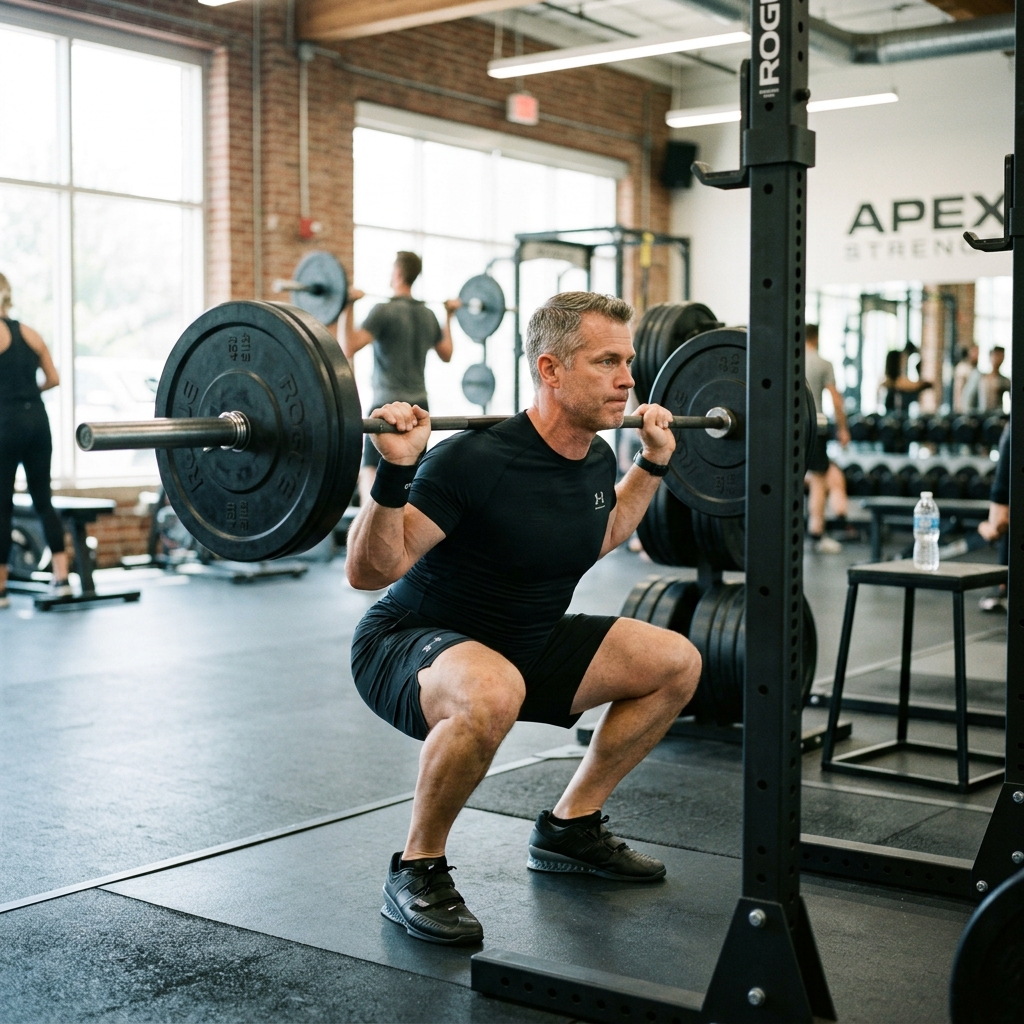
Introduction: The Myth of "Too Old" for Heavy Lifting
If you're over 40, you've probably heard the warning: "Don't lift heavy—you'll wreck your joints." But here's the truth: lifting heavy after 40 is not only safe—it's essential for maintaining muscle mass, bone density, and metabolic health. The key is to train smart, not just hard.
As we age, our bodies undergo natural changes: muscle protein synthesis becomes less responsive (a phenomenon called anabolic resistance), testosterone levels gradually decline, and joint cartilage loses some of its resilience. However, these changes are not a death sentence for strength training. In fact, progressive overload with heavy weights—when done correctly—can slow age-related muscle loss (sarcopenia) and even improve joint health by strengthening the surrounding muscles and connective tissues.
This guide will show you exactly how to lift heavy after 40 without destroying your joints. You'll learn the science, the programming, and the recovery strategies that keep you strong and pain-free for decades to come.
Why Lifting Heavy After 40 Is Different (and Why You Should Do It)
The Science of Aging Muscles
After 40, your body's ability to build muscle declines due to:
- Reduced anabolic hormones (testosterone, growth hormone)
- Increased inflammation and oxidative stress
- Decreased neural drive and motor unit recruitment
But here's the good news: heavy lifting (using loads of 75-85% of your one-rep max) is one of the most effective ways to combat these age-related changes. Heavy loads force your nervous system to recruit high-threshold motor units, which are the primary drivers of muscle growth and strength. This type of training also stimulates the release of growth factors and improves insulin sensitivity—all critical for healthy aging.
The Joint-Saving Mindset
Lifting heavy doesn't mean lifting recklessly. The goal is to build muscle and strength while minimizing stress on your joints. This requires a shift in mindset: instead of chasing personal records every session, you'll focus on consistent, progressive overload with impeccable form and adequate recovery.
The Golden Rules for Joint-Friendly Heavy Lifting
1. Master Form Before Adding Weight
Your form is your best joint insurance. Before you add more weight, ensure your technique is flawless. Poor form—like rounding your lower back during deadlifts or letting your knees cave in during squats—places unnatural stress on joints and can lead to injury.
Pro Tip: > Pro Tip: Record your sets from multiple angles and review them. If you notice any compensations (e.g., hips shooting up first in a squat), drop the weight and fix the pattern before progressing.
2. Warm Up Like a Pro
A proper warm-up increases blood flow, raises tissue temperature, and prepares your joints for heavy loads. Spend 5-10 minutes on dynamic mobility drills (leg swings, arm circles, hip openers) followed by ramp-up sets (lighter sets of the same exercise) before your working sets.
3. Choose Smart Exercises
Some exercises are more joint-friendly than others. For example:
- Squats: Use a full range of motion but avoid excessive depth if you have knee issues. Goblet squats or box squats can be better options.
- Deadlifts: Consider trap bar deadlifts, which place less stress on the lower back.
- Overhead Press: Use dumbbells instead of a barbell to allow a more natural shoulder position.
- Bench Press: Use a moderate grip and avoid bouncing the bar off your chest.
4. Manage Your Training Volume
Volume (total sets and reps) is a key driver of muscle growth, but too much volume can overload joints. After 40, your recovery capacity is lower, so you need to be strategic. Aim for 10-15 hard sets per muscle group per week, spread across 3-4 workouts. Quality over quantity.
5. Use Tempo Training
Controlling the tempo of your lifts—especially the lowering (eccentric) phase—reduces joint stress and increases time under tension, which promotes muscle growth. For example, lower a squat for 3 seconds, pause at the bottom, and explode up. This also improves your mind-muscle connection.
6. Listen to Your Body (But Don't Quit)
There's a difference between muscle soreness and joint pain. Muscle soreness is normal; sharp joint pain is a warning sign. If you feel pain in your knees, shoulders, or lower back, back off and assess your form or exercise selection. Modify, don't stop.
A Practical Step-by-Step Plan for Lifting Heavy After 40
Follow this 4-day split (e.g., Monday, Tuesday, Thursday, Friday) for optimal results:
Day 1: Lower Body (Strength Focus)
- Barbell Back Squat: 4 sets x 5 reps (if your lower back is sensitive, try goblet squats)
- Romanian Deadlift: 3 sets x 8 reps
- Leg Press: 3 sets x 10 reps
- Calf Raises: 3 sets x 12 reps
- Plank: 3 sets x 30-60 seconds
Day 2: Upper Body (Strength Focus)
- Dumbbell Bench Press: 4 sets x 6 reps
- Bent-Over Row: 4 sets x 6 reps
- Seated Dumbbell Shoulder Press: 3 sets x 8 reps
- Lat Pulldown: 3 sets x 10 reps
- Face Pulls: 3 sets x 15 reps (great for shoulder health)
Day 3: Lower Body (Hypertrophy Focus)
- Front Squat or Leg Press: 3 sets x 10 reps
- Walking Lunges: 3 sets x 12 reps per leg
- Lying Leg Curl: 3 sets x 12 reps
- Standing Calf Raises: 4 sets x 15 reps
- Hanging Knee Raises: 3 sets x 10 reps
Day 4: Upper Body (Hypertrophy Focus)
- Incline Dumbbell Press: 3 sets x 10 reps
- Seated Cable Row: 3 sets x 10 reps
- Lateral Raises: 3 sets x 15 reps
- Bicep Curls: 3 sets x 12 reps
- Tricep Pushdowns: 3 sets x 12 reps
Progression: Add weight only when you can complete the top end of the rep range with perfect form. Aim to add 2.5-5 lbs every 1-2 weeks.
Nutrition: Fueling Muscle Growth Without Extra Joint Stress
Protein: Your Best Friend
To overcome anabolic resistance, you need more protein than a younger lifter. Aim for 1.6-2.2 grams per kilogram of body weight daily. Distribute it evenly across 3-4 meals. Check out our detailed protein guide for personalized targets and meal ideas.
Creatine: The Most Proven Supplement
Creatine monohydrate is one of the most researched supplements for muscle growth and strength. It can also support joint health by reducing inflammation. For dosing and timing tips, see our creatine guide.
Anti-Inflammatory Foods
Include foods rich in omega-3s (salmon, walnuts), antioxidants (berries, leafy greens), and collagen (bone broth, chicken skin) to support joint health.
Recovery: The Secret Weapon for Joint Preservation
Sleep and Hormones
Quality sleep is when your body repairs muscle and joints. Poor sleep disrupts natural testosterone production and increases inflammation. Aim for 7-9 hours of uninterrupted sleep.
Active Recovery
On rest days, do light activities like walking, swimming, or yoga. This increases blood flow to joints and reduces stiffness.
Mobility Work
Incorporate 10-15 minutes of daily mobility work, focusing on hips, shoulders, and thoracic spine. This improves joint range of motion and reduces injury risk.
Common Mistakes to Avoid
- Skipping warm-ups – This is the #1 cause of joint injuries.
- Using too much weight too soon – Patience is key.
- Ignoring pain – Don't push through sharp joint pain.
- Neglecting mobility – Flexibility is part of strength.
- Not eating enough protein – Without adequate protein, you won't build muscle, and recovery will suffer.
Conclusion: Your Joints Can Handle It—If You Train Smart
Lifting heavy after 40 is not only possible—it's one of the best investments you can make in your long-term health. By following the principles in this guide—perfect form, smart programming, adequate protein, and proper recovery—you can build muscle, increase strength, and protect your joints for years to come.
Your takeaway: Start with lighter weights, focus on form, and gradually progress. Your body will thank you. For a structured plan, check out our strength training guide to get started safely.
Now go lift something heavy—and do it smart!