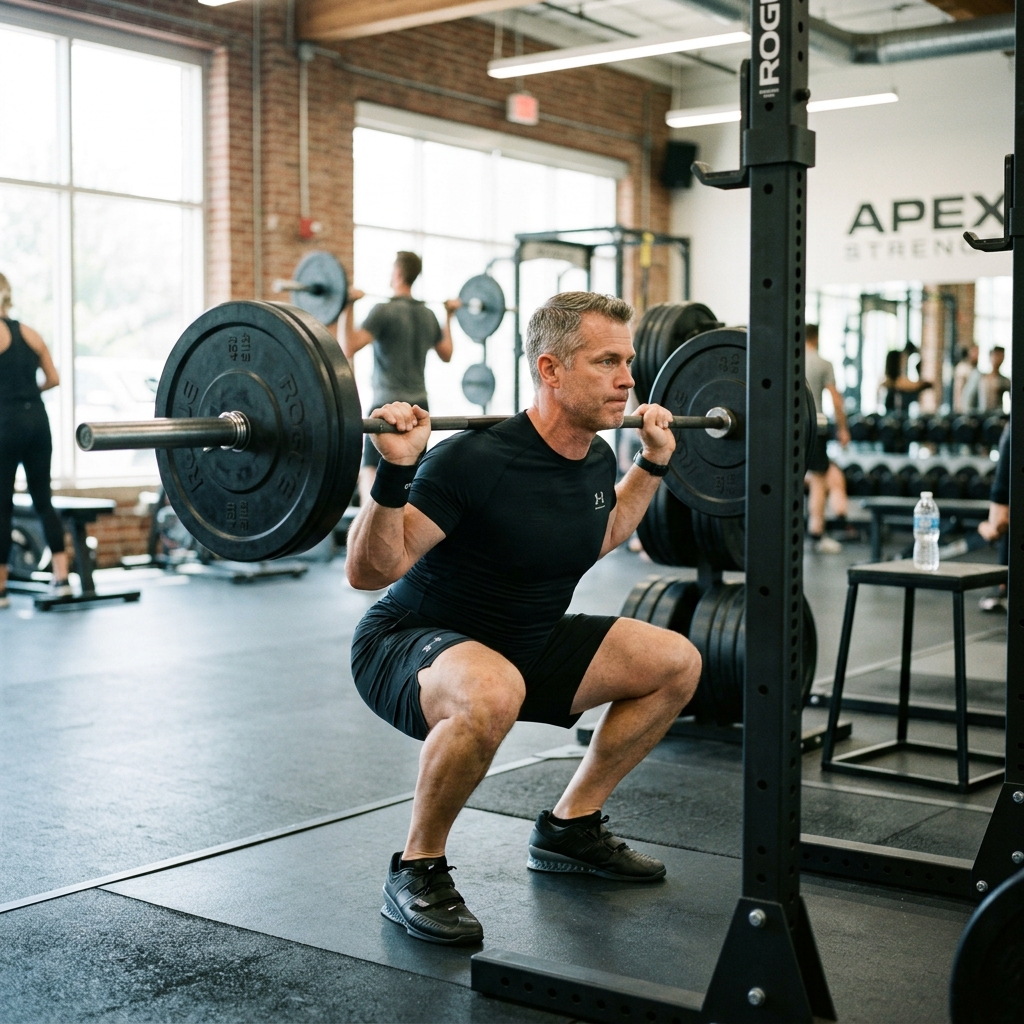
Why Strength Training Becomes Non-Negotiable After 40
After 40, your body undergoes a silent shift. Muscle mass begins to decline at a rate of 3–8% per decade, and bone density follows suit. This isn't just about aesthetics—it's about preserving your independence, metabolic health, and quality of life for decades to come.
Strength training is the single most effective intervention to counteract this decline. It improves insulin sensitivity, boosts mitochondrial function, and even supports brain health. As you age, the way you train must evolve. The goal shifts from simply lifting heavy to building functional, resilient strength that serves you in everyday life.
If you're new to structured training or need a refresher, consider starting with a foundational plan like The Minimalist 3-Day Strength Routine for Muscle Mass and Joint Longevity. It's a perfect entry point that balances muscle growth with joint care.
But to truly master your fitness, you need a broader toolkit. Here are the 10 essential strength workouts every adult over 40 should learn—and why they matter.
The 10 Essential Strength Workouts
1. Goblet Squat
The goblet squat is the safest, most effective way to teach proper squat mechanics. Holding a dumbbell or kettlebell at your chest forces you to keep your torso upright, which reduces lower back strain and improves hip mobility.
- How to do it: Hold a dumbbell vertically at your chest. Keep your feet shoulder-width apart, chest proud, and core braced. Push your hips back and down until your thighs are at least parallel to the floor. Drive through your heels to return to standing.
- Why it’s essential: It builds leg strength, core stability, and hip mobility—all critical for maintaining functional independence.
2. Hip Hinge (Deadlift or Kettlebell Swing)
The hip hinge is the pattern you use every time you pick something up off the floor. Learning to hinge properly protects your lower back and strengthens your posterior chain—glutes, hamstrings, and spinal erectors.
- How to do it (Kettlebell Swing): Stand with feet slightly wider than shoulder-width, holding a kettlebell with both hands. Hinge at your hips, keeping your back flat, then explosively drive your hips forward to swing the bell to chest height. Control the descent.
- Why it’s essential: It builds explosive power, strengthens the glutes, and improves posture—combating the effects of prolonged sitting.
3. Push-Up
The push-up is the ultimate upper-body strength test. It works the chest, shoulders, triceps, and core simultaneously. If you can’t do a full push-up, start on an incline (hands on a bench or wall) and gradually progress.
- How to do it: Place hands slightly wider than shoulder-width, body in a straight line from head to heels. Lower your chest to the floor, keeping elbows at about 45 degrees from your body. Press back up.
- Why it’s essential: It builds pressing strength without needing any equipment, and it’s a great indicator of overall upper-body fitness.
4. Pull-Up or Inverted Row
Pulling strength is critical for balanced shoulders and good posture. Many adults over 40 have overdeveloped chests from desk work and underdeveloped backs. Pull-ups (or inverted rows for beginners) correct this imbalance.
- How to do it (Inverted Row): Set a barbell in a rack at hip height. Lie underneath, grab the bar with an overhand grip, and pull your chest to the bar while keeping your body straight. For pull-ups, use an assist band or machine if needed.
- Why it’s essential: It strengthens the lats, traps, and rear delts, improving shoulder health and preventing rounded shoulders.
5. Farmer’s Carry
The farmer’s carry is a deceptively simple exercise that builds grip strength, core stability, and postural endurance. It mimics real-life activities like carrying groceries or luggage.
- How to do it: Hold a heavy dumbbell or kettlebell in each hand, walk with a tall posture and a braced core. Take controlled steps for 30–60 seconds.
- Why it’s essential: Grip strength is a biomarker of longevity, and this exercise also strengthens the entire kinetic chain.
6. Overhead Press
The overhead press builds shoulder strength and mobility, which are crucial for reaching overhead and preventing injuries. It also engages the core and upper chest.
- How to do it: Stand with feet shoulder-width apart, holding dumbbells or a barbell at shoulder height. Press the weight overhead until your arms are fully extended, then lower under control.
- Why it’s essential: It maintains shoulder function and upper-body strength, which decline rapidly without use.
7. Plank
The plank is the gold standard for core stability. It teaches you to brace your midsection, protecting your spine during any movement.
- How to do it: Start in a forearm plank, elbows under shoulders, body straight. Squeeze your glutes and abs, and hold for 30–60 seconds. Progress to side planks and variations.
- Why it’s essential: A strong core prevents lower back pain and improves balance and posture.
8. Reverse Lunge
Lunges are excellent for single-leg strength, balance, and hip mobility. The reverse lunge is more knee-friendly than forward lunges because it reduces shear force on the joint.
- How to do it: Step backward with one leg, lowering your hips until both knees are bent to 90 degrees. Your front knee should stay over your ankle. Push through the front heel to return to standing.
- Why it’s essential: It builds leg strength and balance while being gentle on the knees.
9. Glute Bridge
The glute bridge isolates the glutes and hamstrings, which are often weak from prolonged sitting. Strong glutes stabilize the pelvis and lower back.
- How to do it: Lie on your back with knees bent, feet flat on the floor. Squeeze your glutes to lift your hips until your body forms a straight line from shoulders to knees. Lower and repeat.
- Why it’s essential: It improves hip extension and reduces lower back strain.
10. Carries with Rotation (Suitcase Carry)
Carrying a weight in one hand (suitcase carry) challenges your core to resist lateral flexion, improving anti-rotation strength and trunk stability.
- How to do it: Hold a heavy dumbbell in one hand, walk with a tall posture, and keep your shoulders level. Switch sides after 30–60 seconds.
- Why it’s essential: It builds functional core strength and improves balance during everyday movements.
How to Structure Your Workout
You don’t need to do all 10 exercises in one session. Instead, aim for 2–3 full-body workouts per week, picking 4–6 exercises per session. Here’s a simple template:
- Day A: Goblet Squat, Push-Up, Inverted Row, Plank
- Day B: Kettlebell Swing, Overhead Press, Reverse Lunge, Glute Bridge
- Day C: Farmer’s Carry, Suitcase Carry, Push-Up, Hip Hinge
Perform 3 sets of 8–12 reps for most exercises (30–60 seconds for carries and planks). Rest 60–90 seconds between sets.
Pro Tip: Focus on perfect form over heavy weights. If you can’t maintain proper alignment, lighten the load. Your joints will thank you.
Nutrition and Recovery: The Missing Links
Strength training is only half the equation. Your body needs the right fuel and recovery to rebuild muscle and bone. After 40, protein timing becomes crucial. Aim for 30g of high-quality protein per meal to maximize muscle protein synthesis. For more on this, check out The 30g Protein Rule: Why Meal Timing Matters More Than Total Calories After 40.
Sleep is when your body repairs itself. Magnesium plays a key role in deep sleep and muscle recovery. Learn which form is best in Magnesium Demystified: Which Form Do You Need for Deep Sleep and Recovery?.
Supplements can also give you an edge. Creatine isn’t just for bodybuilders—it supports both muscle and brain health. Discover the full benefits in Creatine Isn't Just for Bodybuilders: The Brain and Muscle Benefits You’re Missing.
The Longevity Connection
Strength training after 40 is about more than just looking good. It’s about slowing the biological aging process. By building muscle and maintaining bone density, you’re directly influencing your biological age. Daily habits—including exercise—can reverse the clock. Explore Biological Age vs. Chronological Age: 5 Daily Habits That Reverse the Clock to see how.
For a comprehensive approach, check out The Ultimate Best Workout After 40 for Strength and Longevity to see how all these pieces fit together.
Conclusion
Mastering these 10 essential strength workouts will transform your body and your future. Start with 2–3 sessions per week, prioritize form, and be consistent. Combine your training with proper nutrition and recovery, and you’ll not only look better—you’ll feel stronger, move with confidence, and add years of vitality to your life.
Your 40s can be your strongest decade yet. Pick one exercise today and begin.