Biological Age vs. Chronological Age: The Real Number That Matters
When was the last time you felt every one of your years? Maybe it was after climbing a flight of stairs, or when you noticed a new ache that wasn't there last month. Your chronological age—the number of candles on your birthday cake—is a fixed count. But your biological age—the age of your cells, tissues, and organs—tells a different story. It can be decades younger (or older) than your birth certificate suggests.
The gap between these two numbers is the single most powerful metric for longevity. Research from the US National Institute on Aging shows that biological age is a better predictor of disease risk and mortality than chronological age. And here's the good news: while you can't stop the calendar, you can influence your biological age. In fact, a landmark 2023 study published in Aging Cell demonstrated that specific lifestyle interventions can reverse biological age by up to three years in just eight weeks.
For those over 40, this isn't about chasing a fountain of youth—it's about reclaiming vitality, preventing chronic disease, and feeling as energetic as you did in your 30s. The habits below are not extreme biohacks; they're practical, daily actions that target the key drivers of biological aging: inflammation, mitochondrial decline, muscle loss, and metabolic dysfunction. Let's dive into the five habits that can genuinely reverse the clock.
Habit #1: Prioritize Protein at Every Meal
Protein isn't just for bodybuilders—it's the scaffolding of your body. Starting around age 40, you lose muscle mass at a rate of 1-2% per year, a process called sarcopenia. This accelerates biological aging because muscle tissue is metabolically active and plays a crucial role in blood sugar control and immune function.
Yet most people over 40 don't consume enough protein. The recommended dietary allowance (RDA) of 0.8g per kilogram of body weight is too low for active adults. Research suggests 1.2-1.6g per kilogram is optimal for maintaining muscle and preventing age-related decline. That's roughly 90-120g daily for a 165-pound person.
Distribute protein evenly across three meals—aim for 30-40g per meal. This maximizes muscle protein synthesis and prevents the 'protein window' from closing. For women over 40, this is especially critical as hormonal shifts can accelerate muscle loss. If you're unsure where to start, check out these BEST RECIPES FOR WOMEN OVER 40 YEARS, which are packed with high-quality protein and vital nutrients.
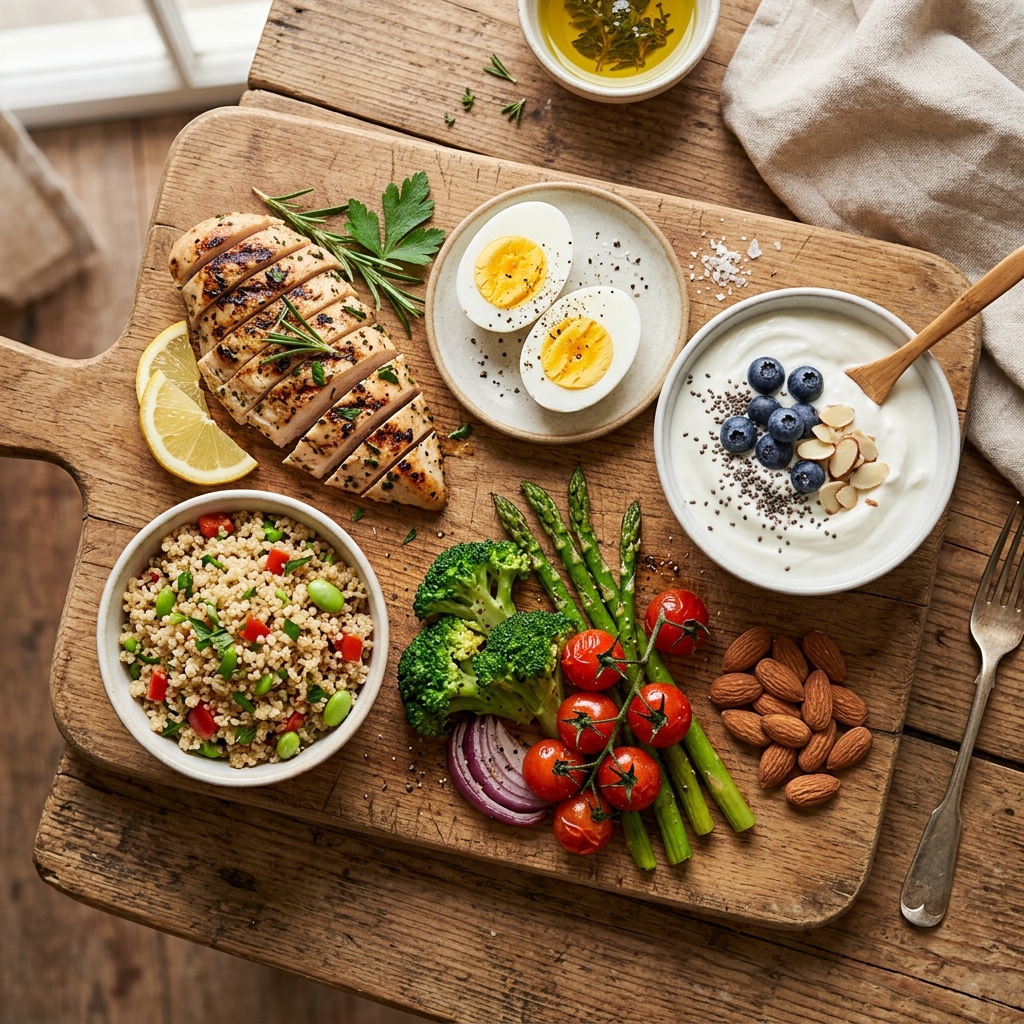
Pro Tip: Start your day with a protein-rich breakfast. Greek yogurt with berries and nuts delivers about 25g of protein and keeps you full until lunch, reducing cravings for processed carbs that spike blood sugar.
Habit #2: Move with Purpose—Strength and Cardio
Exercise is the most powerful tool we have to influence biological age. It doesn't just burn calories; it changes gene expression, boosts mitochondrial function, and reduces inflammation. But not all exercise is equal. The best approach combines two flavors: strength training and cardiovascular work.
Strength training is non-negotiable for building and preserving muscle mass, which directly impacts your biological age. A simple, efficient routine can be as effective as a complex program. If you're looking for a proven plan, the Minimalist 3-Day Strength Routine for Muscle Mass and Joint Longevity is a perfect starting point. It's designed to protect your joints while building functional strength.
For cardio, you have two main options: steady-state Zone 2 work and high-intensity intervals. Both have benefits, but they affect aging differently. Zone 2 (where you can still hold a conversation) improves mitochondrial efficiency and fat oxidation, while HIIT boosts VO2 max and insulin sensitivity. To understand which is better for belly fat and longevity, read our deep dive on Zone 2 Cardio vs. HIIT: Which One Actually Burns Belly Fat Faster?.
Aim for at least 150 minutes of moderate cardio per week, plus two strength sessions. But remember: consistency beats perfection. Even 30 minutes of brisk walking daily can lower biological age markers.
Habit #3: Manage Stress with Micro-Breaks
Chronic stress is the silent accelerator of biological aging. When you're stressed, your body produces cortisol, a hormone that, in excess, breaks down muscle, increases blood sugar, and promotes inflammation. Over time, this leads to faster cellular aging and shortened telomeres—the protective caps on your chromosomes that are a key marker of biological age.
You can't eliminate stress, but you can change how your body responds to it. The key is to build 'micro-breaks' into your day. These are short, 2-5 minute practices that activate your parasympathetic nervous system, signaling your body to rest and repair.
Try this: every hour, take 60 seconds to breathe deeply—inhale for 4 counts, hold for 4, exhale for 6. Or practice a mini-meditation: focus on your breath and let your thoughts pass without judgment. Even a quick walk away from your desk can reset your stress response.
Research shows that these micro-habits can lower cortisol levels and improve heart rate variability (HRV), a marker of biological resilience. Over time, this can shave years off your biological age.
Habit #4: Optimize Your Sleep Environment
Sleep is when your body does the heavy lifting of cellular repair. During deep sleep, your brain clears out beta-amyloid plaques, your muscles rebuild, and your immune system resets. Skimping on sleep—even by an hour—raises cortisol and insulin, accelerating biological aging.
But it's not just about quantity; quality matters. Aim for 7-9 hours of quality sleep per night, but also optimize your sleep environment. Keep your bedroom cool (65-68°F), dark, and quiet. Invest in blackout curtains and earplugs if needed. And most importantly, keep a consistent sleep-wake schedule, even on weekends.
If you struggle with sleep, consider a supplement like magnesium glycinate or a small dose of melatonin (0.5-1mg) to help regulate your circadian rhythm. But always consult your doctor before adding new supplements. For a broader view of what supplements are actually worth your money, check out The 4 Daily Supplements Worth Your Money (And 3 You Should Stop Buying).
Habit #5: Eat for Your Microbiome
Your gut is home to trillions of bacteria that influence everything from digestion to mood to immune function. An imbalanced gut microbiome—called dysbiosis—is linked to chronic inflammation, which accelerates biological aging. The good news: your diet can reshape your microbiome in as little as 24 hours.
To feed the good bacteria, focus on fiber-rich foods: vegetables, fruits, legumes, and whole grains. Aim for at least 30 different plant foods per week to maximize diversity. Add fermented foods like yogurt, kefir, sauerkraut, and kimchi to introduce beneficial probiotics. And cut back on ultra-processed foods and artificial sweeteners, which can harm your microbiome.
For a practical shopping list, the Anti-Inflammatory Grocery List for Peak Metabolic Health is an excellent resource. It's packed with foods that reduce inflammation and support a healthy gut.
Pro Tip: Start your meal with a salad or vegetable-based soup. This preloads your stomach with fiber and water, reducing the glycemic load of the meal and promoting better blood sugar control.
Putting It All Together: A 7-Day Plan
Now that you know the five pillars, here's a simple 7-day plan to implement them without feeling overwhelmed.
Day 1: Set Your Baseline
- Track your current protein intake for a day using a food app.
- Measure your sleep quality by noting how many hours you sleep and how rested you feel.
- Take a 10-minute walk after lunch.
Day 2: Protein Reset
- Aim for 30g of protein at breakfast. Try a protein smoothie with whey or plant protein, spinach, and berries.
- Include a palm-sized portion of protein at lunch and dinner.
- Do a 15-minute strength circuit: squats, push-ups, rows, and plank.
Day 3: Stress Check
- Practice 3 rounds of 4-4-6 breathing at your desk.
- Take a 5-minute walk after dinner.
- Prepare a high-protein snack for tomorrow: Greek yogurt with nuts.
Day 4: Strength Day
- Perform a full strength workout: 3 sets of 8-12 reps of squats, bench press, rows, and deadlifts (or variations).
- Add a 20-minute Zone 2 walk or bike ride.
- Plan your meals for the next two days, ensuring each has protein and veggies.
Day 5: Cardio and Sleep
- Do a 30-minute Zone 2 cardio session (brisk walk, jog, or bike).
- Try a 10-minute evening stretch or yoga.
- Set your bedroom temperature to 68°F and turn off screens 30 minutes before bed.
Day 6: Gut Health Focus
- Eat a colorful salad with fermented vegetables (sauerkraut or kimchi).
- Add a serving of kefir or yogurt to your day.
- Do a 20-minute HIIT session if you're comfortable, or a brisk walk.
Day 7: Recovery and Reflection
- Take a full rest day or go for a gentle walk.
- Reflect on your energy, mood, and sleep. Note any changes.
- Plan your protein and meals for the upcoming week.
The Role of Supplements: Fact vs. Hype
While food should be your foundation, certain supplements can support your longevity goals. After 40, your body's ability to absorb nutrients declines, so supplementation can help fill gaps.
Creatine is one of the most studied supplements for aging. It supports muscle strength, cognitive function, and even bone health. For a comprehensive guide on dosage and timing, see our complete guide to creatine for men over 40. And if you're still on the fence, read Creatine Isn't Just for Bodybuilders: The Brain and Muscle Benefits You’re Missing in 2026 to understand the latest research.
Vitamin D is another critical nutrient, as deficiency is common and linked to immune dysfunction and muscle weakness. A blood test can tell you if you need supplementation.
Omega-3 fatty acids from fish oil reduce inflammation and support heart and brain health. Aim for 1-2g of combined EPA/DHA daily.
But remember: supplements are not substitutes for lifestyle. They work best when layered on top of the five habits above. Always consult with a healthcare provider before starting any new supplement, especially if you have existing health conditions or take medications.
Conclusion: Your Biological Age Is Yours to Shape
The concept of biological age can be empowering. It tells you that your health span—the number of healthy, active years—isn't fixed at birth. By adopting these five daily habits, you can influence how your body ages at the cellular level.
Start with one habit this week. Maybe it's adding protein to breakfast or taking a 10-minute walk. Small changes compound over time. In six months, you could see measurable improvements in your biomarkers, energy, and strength.
Remember, the goal isn't to defy the calendar—it's to live fully at every age. Your biological age is a number you can improve, and the best time to start is today. So, pick one habit, implement it consistently, and watch your future self thank you.
Ready to take control? Begin with the habit that feels easiest, and build from there. Your vitality is worth it.