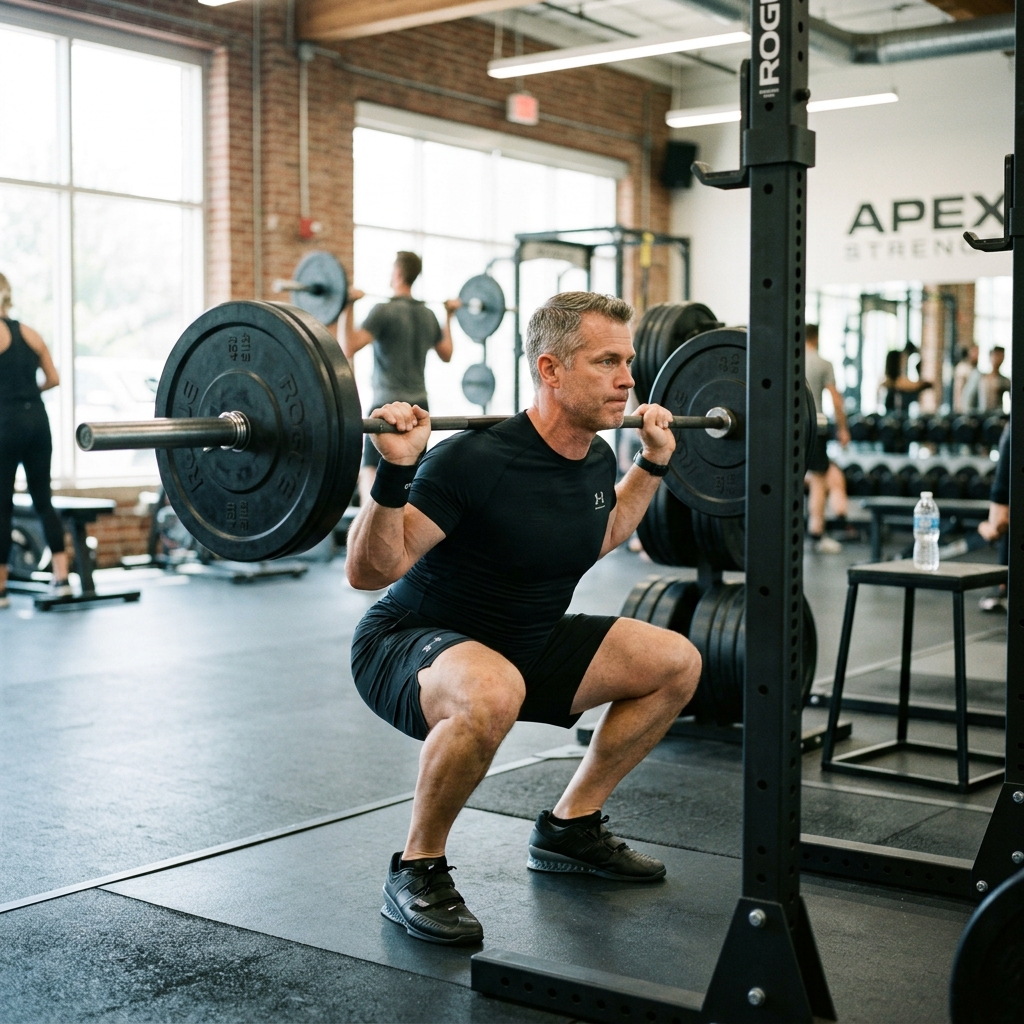
Why This 30-Minute Full Body Strength Routine Is Perfect for Over 40
You don’t need a gym membership, a rack of dumbbells, or two hours of free time to build serious muscle. In fact, after age 40, your body responds remarkably well to short, intense, and consistent strength training—provided you train smart. This 30-minute full body strength routine to build muscle at home is designed specifically for the over-40 demographic, focusing on compound movements, joint safety, and progressive overload.
As we age, our bodies undergo significant changes: muscle mass naturally declines (a process called sarcopenia), testosterone levels gradually drop, and joint cartilage thins. But here’s the good news: strength training can counteract these effects, improving not just muscle size but also bone density, metabolic health, and even cognitive function. The key is to make every minute count.
The Science of Muscle Building After 40
Research shows that muscle protein synthesis (MPS) becomes less responsive to amino acids and resistance training as we age. This means we need to be more deliberate with our training frequency and protein intake. A 30-minute full body routine done three times a week is often more effective than a marathon gym session once a week, because it keeps MPS elevated consistently.
To maximize results, you need to train with enough intensity to create micro-tears in muscle fibers, then support recovery with adequate protein. If you’re unsure how much protein you need, check out The 30g Protein Rule: Why Meal Timing Matters More Than Total Calories After 40—it’s a game-changer for your physique goals.
The Routine: 30 Minutes, Full Body, Home-Friendly
This routine uses minimal equipment: a pair of dumbbells (or resistance bands), a chair, and a yoga mat. You’ll perform 5 exercises, each for 4 sets of 8-12 reps, with 60 seconds rest between sets. The entire workout should take about 30 minutes. Focus on controlled, slow negatives (3 seconds down) and explosive but controlled positives.
Warm-Up (5 Minutes)
Don’t skip this. A proper warm-up increases blood flow, lubricates joints, and reduces injury risk.
- Arm Circles – 30 seconds each direction
- Leg Swings – 10 per leg
- Bodyweight Squats – 10 reps
- Cat-Cow Stretch – 1 minute
- High Knees – 30 seconds
Exercise 1: Goblet Squat (Legs, Glutes, Core)
Hold a dumbbell vertically against your chest. Keep your chest up, back straight, and squat down until your thighs are parallel to the floor. Drive through your heels to stand up. This is a fantastic compound movement that hits your quads, glutes, and core.
Exercise 2: Push-Up (Chest, Shoulders, Triceps)
If standard push-ups are too challenging, perform them on an elevated surface like a kitchen counter or chair. Keep your body in a straight line from head to heels. Lower your chest to the floor (or the surface) and push back up. To make it harder, elevate your feet.
Exercise 3: Bent-Over Dumbbell Row (Back, Biceps)
Hinge at your hips, keeping your back flat, and let the dumbbells hang. Pull the dumbbells toward your hips, squeezing your shoulder blades together. Lower slowly. This exercise is crucial for posture and counteracts all the sitting we do.
Exercise 4: Dumbbell Overhead Press (Shoulders, Triceps)
Stand or sit with a dumbbell in each hand at shoulder height. Press them overhead until your arms are fully extended. Lower with control. This builds strong, functional shoulders.
Exercise 5: Romanian Deadlift (Hamstrings, Glutes, Lower Back)
Hold dumbbells in front of your thighs. With a slight bend in your knees, hinge at your hips, pushing your butt back, and lower the weights until you feel a stretch in your hamstrings. Squeeze your glutes to return to the start.
Pro Tip: For the first two weeks, use a weight that allows you to complete all sets with good form. Then, increase the weight by 5% to apply progressive overload. If you can’t finish the last 2 reps with perfect form, the weight is too heavy.
How to Progress and Avoid Plateaus
Your body adapts quickly, so you need to challenge it. Here are three ways to progress:
- 1.Increase Weight: Once you can do 12 reps on the last set with perfect form, add 2-5 pounds.
- 2.Increase Reps: If you can’t increase weight, aim for 15 reps instead of 12.
- 3.Decrease Rest Time: Reduce rest from 60 to 45 seconds to increase intensity.
Remember, consistency trumps perfection. If you miss a day, just get back on track the next day.
Nutrition: Fueling Your Muscle Growth
A 30-minute workout is only half the battle. To build muscle, you need a slight caloric surplus and adequate protein. For over-40 individuals, a higher protein intake is essential to overcome anabolic resistance. Aim for 1.6-2.2 grams of protein per kilogram of body weight daily. If you're struggling to hit that target, consider Top 10 High-Protein Meal Prep Recipes to Support Muscle Strength to make it easy.
Also, don't overlook the power of supplements. Creatine is one of the most researched and effective supplements for muscle growth, especially after 40. It can help you push harder in your workouts and improve recovery. For a deep dive, read Creatine for Strength and Muscle Retention After 40: Complete Guide.
Recovery: The Unsung Hero
Muscle grows during rest, not during the workout. After 40, recovery becomes even more critical. Ensure you get 7-9 hours of quality sleep, and consider active recovery like walking or yoga on your rest days. If you’re also doing cardio, you might wonder how to balance it with strength. Check out Zone 2 Cardio vs. HIIT: Which One Actually Burns Belly Fat Faster? to make an informed choice.
Sample Weekly Schedule
- Monday: Full body routine
- Tuesday: 30 minutes of Zone 2 cardio (brisk walking or cycling)
- Wednesday: Full body routine
- Thursday: Active recovery (yoga or stretching)
- Friday: Full body routine
- Saturday: Optional: 30 minutes of Zone 2 cardio
- Sunday: Rest
This gives you three days of strength, two days of cardio, and two rest days—perfect for muscle growth and joint health.
Common Mistakes to Avoid
- Skipping Warm-Up: This is non-negotiable, especially after 40.
- Using Too Much Weight: Form over ego. Poor form leads to injury.
- Neglecting Nutrition: You can’t out-train a bad diet.
- Not Sleeping Enough: Sleep is when your body repairs muscle.
Conclusion: Your 30-Minute Path to Strength and Vitality
Building muscle at home in just 30 minutes a day is not only possible—it’s optimal for your age. This full body strength routine is designed to be efficient, effective, and safe for your joints. Pair it with proper nutrition, smart supplementation, and adequate recovery, and you’ll see remarkable changes in your strength, energy, and overall health.
Start today. Your future self will thank you. And if you need a bit more structure, check out The Minimalist 3-Day Strength Routine for Muscle Mass and Joint Longevity for another perspective.