Caloric Surplus vs. Deficit: How to Gain Muscle Strength Without Belly Fat
For decades, the fitness industry has presented a false dilemma: you either eat in a caloric surplus to build muscle, or you cut calories to lose fat. But after age 40, this binary thinking can sabotage your goals. You want to get stronger, add lean mass, and boost your metabolism—but you absolutely do not want to wake up one morning with a new layer of belly fat that refuses to leave.
The good news? You can have it both ways. By understanding how your body responds to energy balance after 40, you can strategically alternate between a caloric surplus and a caloric deficit to build muscle strength while keeping your waistline in check. This isn't about extreme bulk-and-cut cycles; it's about precision, patience, and a focus on body composition rather than the scale.
If you're serious about reclaiming your vitality, you'll want to pair this nutrition strategy with a proper training plan. Check out our guide on Strength Training for Men Over 40: Vitality, Testosterone, and Power to build the foundation for muscle growth.
Why Your 40s Change the Game
After 40, your body undergoes several shifts that directly impact how you handle calories:
- Hormonal changes: Testosterone and growth hormone levels naturally decline, making muscle protein synthesis less efficient.
- Metabolic slowdown: Your basal metabolic rate (BMR) drops, often due to muscle loss and changes in physical activity. This is exactly why you need to understand How to Fix Metabolic Slowdown After 40 with Strength-Focused Nutrition.
- Insulin sensitivity: Cells become less responsive to insulin, increasing the likelihood that excess calories are stored as belly fat rather than used for muscle repair.
This means the classic 'dirty bulk' approach—eating everything in sight to gain muscle—will almost certainly lead to unwanted fat gain. Instead, you need a more calculated strategy.
What Is a Caloric Surplus? (And Why It's Still Necessary)
A caloric surplus occurs when you consume more energy than you expend. This is non-negotiable if you want to build muscle. Without a surplus, your body lacks the raw materials to synthesize new muscle tissue. But the size of that surplus matters immensely.
The Right Surplus for Over 40
- Too large (500+ calories/day): Rapid fat gain, especially visceral fat around the belly.
- Too small (100 calories/day): Minimal muscle gain, may not overcome daily fluctuations.
- Sweet spot (200-300 calories/day): Allows for steady muscle growth while minimizing fat storage.
For a 180-pound man, that translates to roughly 2,800–2,900 calories per day, depending on activity level. The key is to make those extra calories count—not with junk food, but with high-quality protein and nutrient-dense carbs.
Pro Tip: Instead of a full-blown bulk, try a 'mini-surplus' for 6–8 weeks. Add just 250 calories daily, focusing on protein. You'll build muscle without the belly fat, then transition to a maintenance or slight deficit phase to reveal your progress.
The Caloric Deficit: When to Use It
A caloric deficit—consuming fewer calories than you burn—is essential for fat loss. But after 40, you must be careful. Aggressive deficits can accelerate muscle loss, which further slows your metabolism and makes future muscle gain harder.
Safe Deficit for Over 40
- Moderate deficit: 300–500 calories below maintenance.
- Protein intake: Increase to 1.2–1.6 grams per pound of body weight to preserve muscle.
- Strength training: Continue lifting heavy to signal your body to keep muscle.
If you're in a cutting phase, you'll want to read our Ultimate Guide to Protein Over 40 to ensure you're getting enough to protect your hard-earned muscle.
How to Gain Muscle Strength Without Belly Fat: A Step-by-Step Strategy
Step 1: Calculate Your Maintenance Calories
Use an online calculator (like the Mifflin-St Jeor equation) to estimate your Total Daily Energy Expenditure (TDEE). This is your starting point.
Step 2: Choose Your Phase
- Muscle-building phase: Add 200–300 calories to maintenance.
- Fat-loss phase: Subtract 300–400 calories from maintenance.
Step 3: Prioritize Protein at Every Meal
Protein is your most powerful tool for preventing belly fat while building muscle. It increases satiety, has a high thermic effect, and supports muscle repair. Aim for 30–40 grams of protein per meal, and consider a protein shake post-workout.
Step 4: Time Your Carbs Strategically
- Training days: Eat more carbs around your workout to fuel performance and replenish glycogen.
- Rest days: Reduce carbs slightly, increase healthy fats.
Step 5: Monitor with More Than the Scale
Use weekly waist measurements and progress photos. The scale can mislead you—muscle is denser than fat. If your waist is staying stable and your strength is increasing, you're on the right track.
Step 6: Incorporate Supplements That Work
Certain supplements can enhance your results. For example, creatine for men over 40 is one of the most researched and effective compounds for increasing strength and muscle mass without adding fat. Also, Creatine Isn't Just for Bodybuilders: The Brain and Muscle Benefits You’re Missing 2026 highlights its cognitive benefits, which are especially valuable as you age.
Step 7: Follow a Smart Training Program
Nutrition is only half the equation. You need a training plan that stimulates muscle growth without overtraining your joints. Our Minimalist 3-Day Strength Routine for Muscle Mass and Joint Longevity is perfect for busy men over 40.
Common Mistakes That Lead to Belly Fat
- Overestimating calorie needs: Many 40+ men think they can eat like they did in their 20s. You can't.
- Ignoring sleep: Poor sleep increases cortisol and ghrelin, driving belly fat storage.
- Skipping strength training: Cardio alone won't preserve muscle. You must lift.
- Using 'dirty' surpluses: Fast food may hit calorie targets but lacks micronutrients and promotes inflammation.
The Role of Anti-Inflammatory Nutrition
Inflammation is a silent saboteur after 40. It impairs insulin sensitivity and makes it easier to store fat. Include anti-inflammatory foods like fatty fish, olive oil, and leafy greens. You can also consider supplements like Omega-3 Fish Oil: Reducing Joint Inflammation for Stronger Lifts and Vitamin D3 + K2: The Synergistic Duo for Bone Density and Heart Health to support your joints and metabolism.
Sample Day: Muscle-Building Without Belly Fat
Here's what a day might look like in a 250-calorie surplus:
- Breakfast: 3 eggs, 1 cup oatmeal, 1 scoop whey protein, berries.
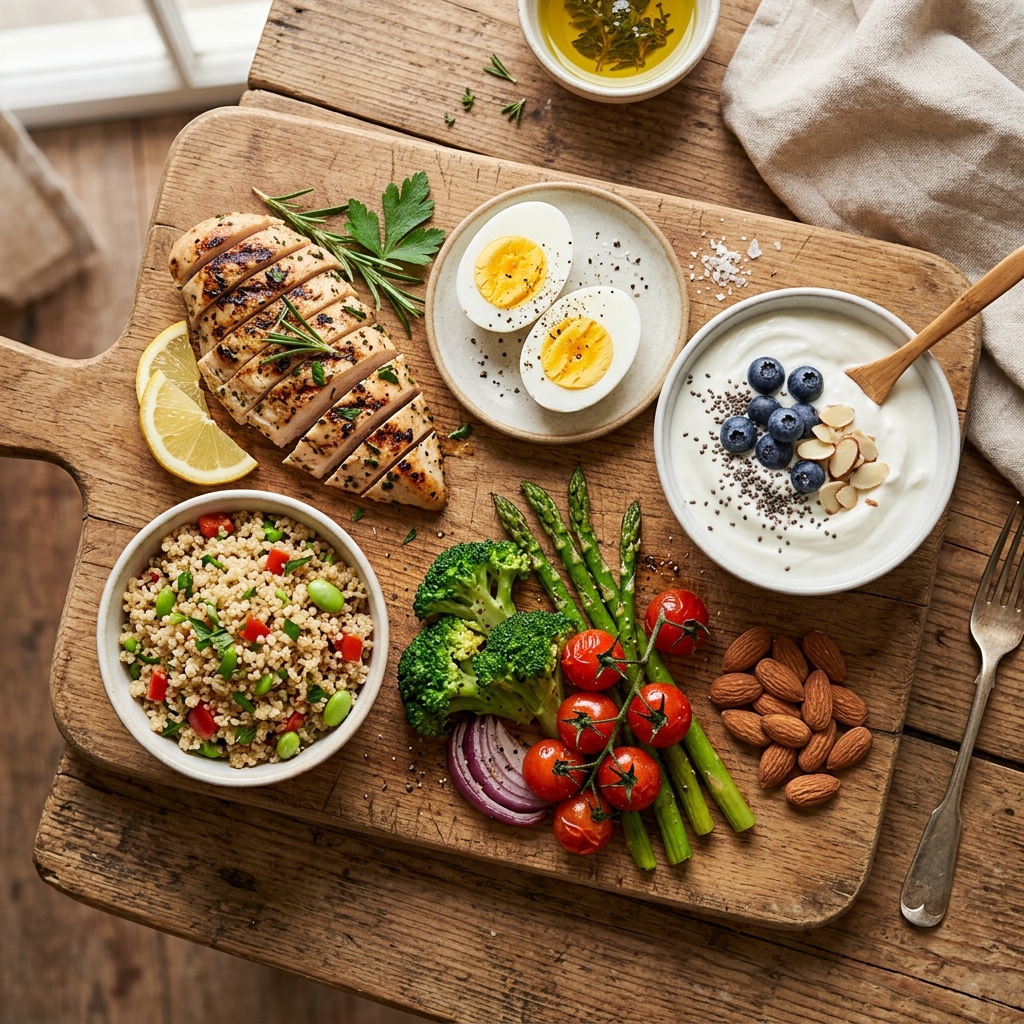
- Lunch: Grilled chicken breast, quinoa, roasted vegetables, olive oil.
- Snack: Greek yogurt with almonds.
- Dinner: Salmon, sweet potato, asparagus.
- Post-workout (if training): Protein shake with banana.
Total: ~2,800 calories, 200g protein, 300g carbs, 80g fat.
Frequently Asked Questions
Can I build muscle in a caloric deficit?
Yes, but it's slower and requires high protein and heavy lifting. Beginners and those returning after a break can often build muscle in a slight deficit, but after 40 it's more challenging.
How long should a bulk or cut phase last?
Aim for 8–12 weeks per phase, then reassess. This prevents metabolic adaptation and mental fatigue.
Is it possible to lose belly fat while gaining muscle?
Yes, especially if you're new to training or have significant weight to lose. This is called body recomposition. It requires a small deficit, high protein, and consistent strength training.
Conclusion: The Balanced Approach to Strength and Leanness
You don't have to choose between a bulky, fat-laden body and a skinny, weak one. By mastering the art of the caloric surplus vs. deficit—using a modest surplus to build muscle and a controlled deficit to trim fat—you can achieve the strong, lean physique you want after 40. The secret is to let your body composition, not the scale, guide your decisions.
Start by calculating your maintenance calories, commit to a strength-focused training program, and make protein your non-negotiable. With patience and consistency, you'll gain muscle strength without the belly fat, and you'll feel more vital than ever.
Ready to transform your body? Begin with a 6-week mini-surplus and see how much stronger you can get.