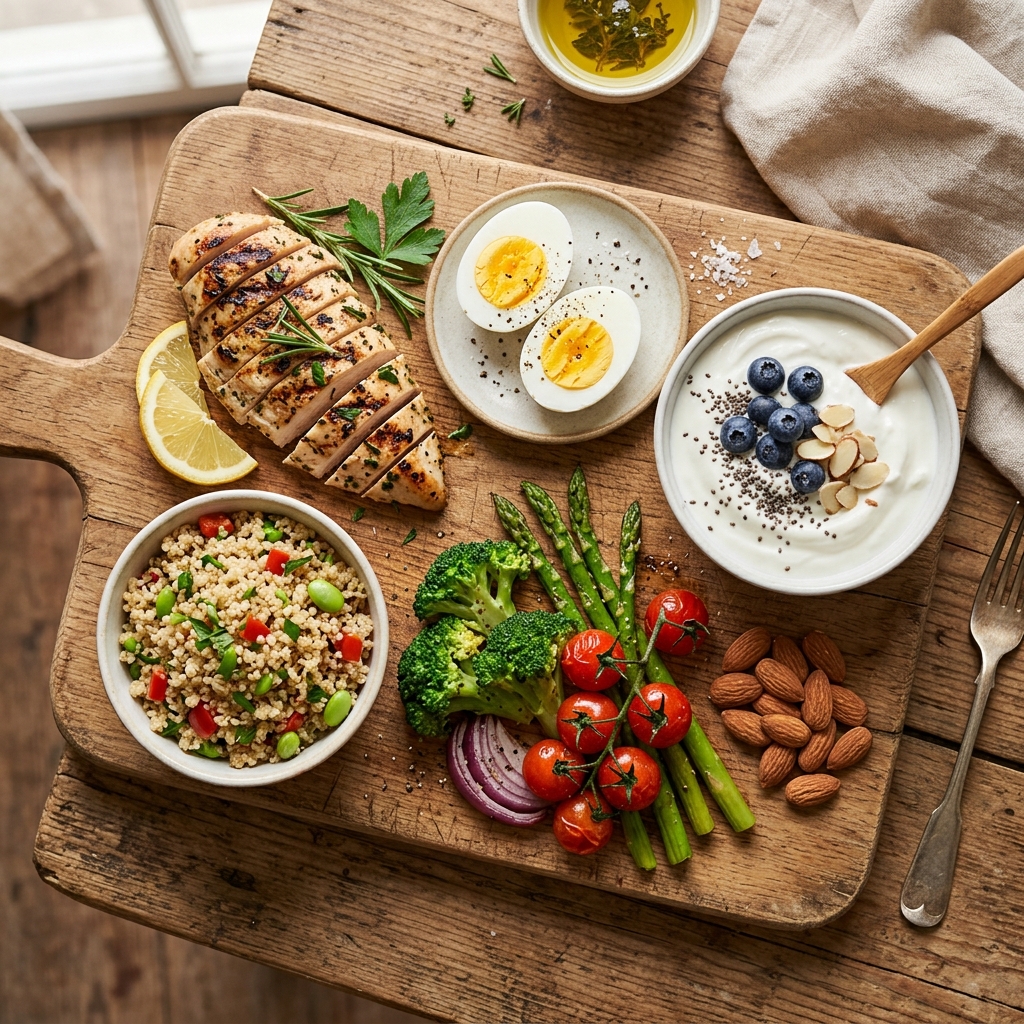
Turning 40 is often a turning point in how your body responds to food and exercise. You might notice that stubborn fat clings a little longer, or that your strength doesn't bounce back as quickly as it used to. While hormones play a significant role, one of the most powerful, controllable levers is your daily protein target for over 40 women. Getting this right can be the difference between a slow decline in muscle and a vibrant, strong decade ahead.
Why Protein Becomes Non-Negotiable After 40
After age 40, women enter perimenopause, a phase marked by declining estrogen and progesterone. These hormonal shifts accelerate sarcopenia, the age-related loss of muscle mass and strength. For context, women can lose up to 3-8% of muscle mass per decade after 30, with the rate accelerating after menopause. This matters far beyond aesthetics—muscle is your metabolic engine. It burns more calories at rest than fat tissue, regulates blood sugar, and supports bone density.
When muscle mass declines, your resting metabolic rate drops, making it easier to gain fat and harder to lose it. This is why simply eating less isn't the answer. The research is clear: a higher protein intake, combined with resistance training, is the most effective strategy to preserve muscle and keep your metabolism firing. As we discuss in How to Combat Sarcopenia (Age-Related Muscle Loss) with Strength Training, exercise and protein work synergistically to build and maintain muscle.
The Magic Number: Your Daily Protein Target
So, how much protein do you actually need? The standard RDA of 0.8 grams per kilogram of body weight (about 0.36 grams per pound) is the minimum to prevent deficiency, not to optimize health. For women over 40 aiming to prevent muscle loss and boost metabolism, the research points to a higher range.
Your target: 1.2 to 1.6 grams of protein per kilogram of body weight per day.
For a 150-pound (68 kg) woman, that translates to roughly 82 to 109 grams of protein daily. If you're highly active or lifting heavy weights, aim for the higher end of this range. If you're mostly sedentary, the lower end is a good starting point.
Calculating Your Personal Target
Here's a simple formula:
- 1.Weigh yourself in kilograms (divide your weight in pounds by 2.2).
- 2.Multiply your weight in kg by 1.2 (minimum) and by 1.6 (maximum) to get your daily protein range in grams.
- 3.Adjust based on activity: If you engage in regular strength training, target the higher end. If you're recovering from an injury or illness, you may need even more temporarily.
Why Distribution Matters: The Anabolic Window
Your body doesn't use protein as efficiently in one large dose. Research shows that muscle protein synthesis (the process of building new muscle) is maximized when you consume 25-35 grams of high-quality protein per meal. This is often called the 'per-meal threshold.'
Instead of saving all your protein for dinner, aim to spread it across three to four meals or snacks. For example:
- Breakfast: 25-30g protein (e.g., 3 eggs + Greek yogurt)
- Lunch: 30-35g protein (e.g., chicken salad with quinoa)
- Dinner: 30-35g protein (e.g., salmon with vegetables)
- Snack: 10-15g protein (e.g., protein shake or cottage cheese)
This approach not only supports muscle preservation but also keeps you full and satisfied, helping to control cravings and stabilize blood sugar.
Pro Tip: To maximize muscle protein synthesis, pair your protein intake with a strength training routine. The combination of resistance exercise and adequate protein is far more effective than either alone. If you're new to lifting, check out our strength training program over 40 to get started safely.
The Best Protein Sources for Women Over 40
Not all protein is created equal. Aim for high-quality sources that provide all essential amino acids, especially leucine, which is the key trigger for muscle protein synthesis. Leucine is found in animal products and soy.
Top Animal-Based Proteins
- Chicken breast: 31g protein per 100g
- Turkey: 29g per 100g
- Lean beef: 26g per 100g
- Salmon: 25g per 100g
- Eggs: 6g per large egg
- Greek yogurt: 10g per 100g
- Cottage cheese: 11g per 100g
Plant-Based Options (Combine for Completeness)
- Lentils: 9g per 100g cooked
- Chickpeas: 8g per 100g cooked
- Tofu: 8g per 100g
- Quinoa: 4g per 100g cooked
- Edamame: 11g per 100g
If you follow a vegan or vegetarian diet, you need to be more strategic. Plant proteins are often lower in leucine, so you may need to eat slightly more or consider a leucine supplement. Combining different plant sources (like rice and beans) can create a complete amino acid profile.
Protein and Metabolism: The Thermic Effect
Protein has a higher thermic effect of food (TEF) than carbs or fats. This means your body burns more calories digesting protein—around 20-30% of the calories it contains, compared to 5-10% for carbs and 0-3% for fats. By increasing your protein intake, you naturally boost your metabolism slightly.
Moreover, a higher protein intake helps preserve lean mass, which is the biggest determinant of your resting metabolic rate. In a caloric deficit, a high-protein diet ensures you lose fat rather than muscle, keeping your metabolism from plummeting.
Practical Steps to Hit Your Daily Target
Now that you know your target, here's a step-by-step plan to actually hit it every day:
- 1.Start with breakfast. Most women under-eat protein in the morning. Aim for at least 25g. Try a veggie omelet with feta or a Greek yogurt parfait with nuts and seeds.
- 2.Use a protein scale (or measuring cups) for the first few weeks to get a visual sense of portion sizes. A palm-sized portion of chicken or fish is roughly 25-30g.
- 3.Add protein to every snack. Instead of crackers or fruit, pair them with cheese, hummus, or a hard-boiled egg.
- 4.Consider a high-quality protein powder. A whey or plant-based protein shake is an easy way to add 20-30g, especially post-workout. This is particularly helpful on busy days.
- 5.Plan your dinners around protein. Fill half your plate with vegetables, a quarter with complex carbs, and a quarter with a lean protein source.
Common Mistakes to Avoid
- Overestimating portion sizes: A 'serving' of meat is often smaller than you think. Use a food scale or your palm as a guide.
- Skimping on breakfast: If you start low, it's hard to catch up. Aim for at least 25g at breakfast.
- Ignoring post-workout nutrition: After strength training, your muscles are primed to absorb protein. Consume 20-30g within 2 hours post-exercise.
- Relying on processed protein bars: Many are high in sugar. Choose real food sources first, and use bars only as an occasional convenience.
How Protein Fits into Your Overall Strategy
Protein isn't a magic bullet; it works best alongside a comprehensive approach. To truly prevent muscle loss and boost metabolism, combine your protein intake with a consistent resistance training program. As highlighted in Strength Training for Women Over 40: Hormones, Muscle, and Bone Density, lifting weights is the most effective stimulus for muscle growth and bone health. Additionally, don't neglect your recovery—adequate sleep and stress management are vital for hormone balance and muscle repair. If you're managing joint discomfort, a structured program like how-to-prevent-workout-injuries-and-train-pain-free-after-40 can help you stay consistent without setbacks.
Conclusion: Your Takeaway
Your daily protein target for over 40 women is between 1.2 and 1.6 grams per kilogram of body weight. This isn't just a number—it's a powerful tool to preserve muscle, boost metabolism, and thrive through your 40s and beyond. Start by calculating your target, then make small, sustainable changes to your meals. Combine this with strength training, and you'll be amazed at how much energy and vitality you can reclaim.
Remember, consistency beats perfection. Even if you don't hit your target every single day, making a conscious effort to increase protein will yield significant results over time. Your future self will thank you.