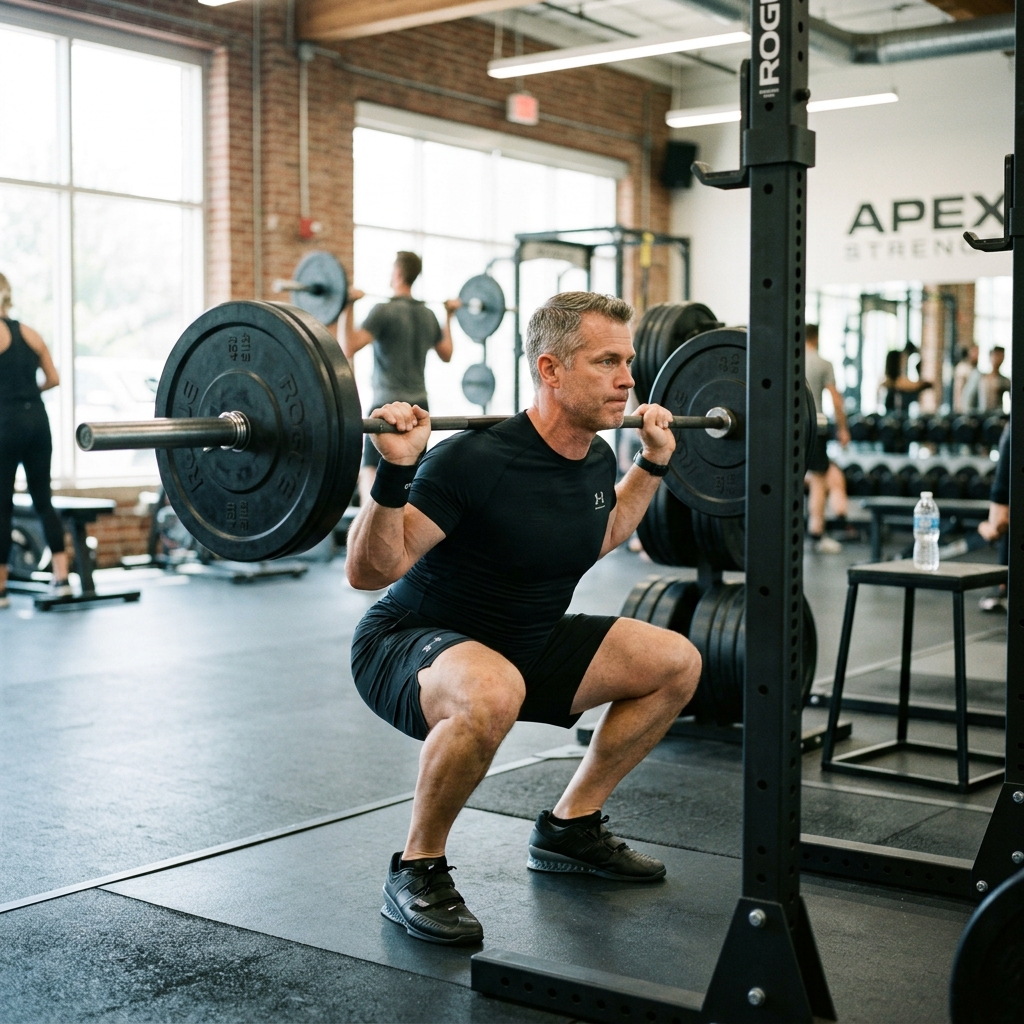
Introduction: Why Calisthenics After 40 Is a Game-Changer (If You Protect Your Joints)
Turning 40 doesn't mean you have to give up on building a strong, capable body. In fact, calisthenics—using your own body weight for strength training—is one of the most effective and accessible ways to stay fit as you age. But there's a catch: your joints aren't the same as they were at 25. Cartilage thins, synovial fluid decreases, and tendons become less elastic. That's why the question "how to start calisthenics after 40 without joint pain" is so important. The answer isn't to avoid calisthenics; it's to approach it intelligently, with joint-friendly progressions, proper recovery, and a focus on longevity over ego.
In this guide, you'll learn exactly how to begin calisthenics after 40 while minimizing joint stress. We'll cover the science of joint aging, a step-by-step plan, essential recovery strategies, and how nutrition and stress management play a massive role. By the end, you'll have a clear roadmap to build strength without sacrificing your joints.
Why Joint Pain Happens After 40 (and How to Prevent It)
The Biology of Aging Joints
After 40, several changes occur in your joints:
- Cartilage degradation: The protective cushioning between bones wears down, leading to friction and pain.
- Reduced synovial fluid: This fluid lubricates joints; its production declines with age.
- Tendon and ligament stiffness: Collagen cross-linking makes connective tissues less flexible.
- Muscle loss (sarcopenia): Without strength training, you lose muscle mass, which increases joint stress.
The good news? You can slow and even reverse some of these changes with smart training. Calisthenics, when done correctly, improves joint stability by strengthening the muscles around them.
The Role of Inflammation and Stress
Chronic inflammation and high cortisol levels can accelerate joint pain. If you're constantly stressed, your body prioritizes survival over recovery, making you more prone to injuries. That's why managing stress is non-negotiable. For a deeper dive, check out High Cortisol Signs: How Chronic Stress Secretly Sabotages Your Fitness Goals.
The Joint-Friendly Calisthenics Approach
Rule #1: Master Progressions, Not Ego
You don't need to jump into pull-ups or pistol squats on day one. Start with the easiest variation and progress only when you can perform it pain-free for 3 sets of 12 reps. This builds tendon strength and joint resilience.
Rule #2: Prioritize Range of Motion and Control
Slow, controlled movements are safer than fast, jerky ones. They also build more strength. Always move through a pain-free range of motion.
Rule #3: Warm Up and Cool Down Religiously
A 10-minute warm-up increases blood flow and synovial fluid. A cool-down with static stretching helps maintain flexibility.
Pro Tip: Before every calisthenics session, spend 5 minutes on joint mobility drills (arm circles, hip circles, ankle rolls) and 5 minutes on light cardio (jumping jacks, brisk walking). This "prehab" routine can reduce injury risk by up to 50%.
Step-by-Step: How to Start Calisthenics After 40 Without Joint Pain
Step 1: Get Medical Clearance (If Needed)
If you have existing joint conditions, consult a doctor or physical therapist. They can identify restrictions and suggest modifications.
Step 2: Build a Foundation with Joint Mobility
Before adding resistance, improve mobility. Do these daily:
- Shoulder dislocates with a broomstick: 2 sets of 10
- Cat-cow stretches: 2 sets of 10
- Deep squat holds: 3 sets of 30 seconds
- Ankle rocks: 2 sets of 10 per side
Step 3: Start with the "Big 5" Joint-Friendly Exercises
These exercises strengthen major movement patterns without excessive joint stress:
- 1.Incline push-ups (hands on a wall or bench) – 3 sets of 8-12
- 2.Assisted squats (holding a doorframe or TRX) – 3 sets of 10-15
- 3.Glute bridges – 3 sets of 12-15
- 4.Bird-dog – 3 sets of 8 per side
- 5.Dead hangs (from a bar, feet on ground) – 3 sets of 20-30 seconds
Perform this routine 3 times per week, with at least one rest day between sessions.
Step 4: Progress Gradually
Every 2 weeks, if you're pain-free, make one exercise slightly harder:
- Incline push-ups → lower incline → knee push-ups → full push-ups
- Assisted squats → bodyweight squats → goblet squats (with light weight)
- Dead hangs → active hangs → scapular pulls → assisted pull-ups
Step 5: Incorporate Recovery Days
Your joints need time to adapt. Never train the same movement pattern on consecutive days. Use active recovery like walking, swimming, or yoga.
Nutrition and Recovery: The Missing Link for Joint Health
You can't out-train a poor diet. After 40, protein needs increase to preserve muscle and support tendon repair. Aim for 1.6-2.2 grams of protein per kilogram of body weight. For a science-backed breakdown, read How Much Protein Do You Really Need After 40? (Science-Backed Guide).
Also, focus on anti-inflammatory foods. Chronic inflammation worsens joint pain. Incorporate fatty fish, leafy greens, berries, and turmeric. For a complete shopping list, see The Anti-Inflammatory Grocery List for Peak Metabolic Health.
Key Supplements for Joint Health After 40
- Collagen peptides: 10-15g daily may support tendon and cartilage health.
- Vitamin D3 with K2: Essential for bone density and calcium regulation. Learn more about does vitamin d3 with k2 improve bone density after 50.
- Omega-3s: Reduce inflammation and joint stiffness.
- Glucosamine and chondroitin: Mixed evidence, but some find relief.
Sample 4-Week Beginner Plan
| Week | Frequency | Exercises | Sets/Reps |
|------|-----------|-----------|-----------|
| 1 | 3x/week | Incline push-ups, assisted squats, glute bridges, bird-dog, dead hangs | 3x8-12 |
| 2 | 3x/week | Same, but increase reps by 2 | 3x10-14 |
| 3 | 3x/week | Lower incline for push-ups, add light goblet squats | 3x8-12 |
| 4 | 3x/week | Knee push-ups, bodyweight squats, add scapular pulls | 3x8-12 |
Always listen to your body. If a movement causes sharp pain, stop and regress.
The Mental Game: Patience and Consistency
After 40, progress is slower but sustainable. Celebrate small wins. Consistency beats intensity. Incorporate daily habits that build long-term strength. For inspiration, see 10 Daily Habits that Build Long-Term Physical and Mental Strength.
Conclusion: You Can Start Calisthenics After 40 Without Joint Pain
Starting calisthenics after 40 is not only possible—it's one of the best things you can do for your long-term health. By prioritizing joint mobility, gradual progression, proper nutrition, and recovery, you can build strength without pain. Remember, the goal is not to relive your 20s but to thrive in your 40s, 50s, and beyond. Start today with the step-by-step plan above, and your joints will thank you.
Key Takeaway: Listen to your body, progress slowly, and fuel your recovery. Calisthenics after 40 is a marathon, not a sprint—and your joints will reward your patience.