Introduction
Hiking is one of the most rewarding ways to stay active after 40. It combines cardiovascular conditioning, strength, balance, and time in nature. But for many people over 40, the joy of the trail is overshadowed by nagging knee pain. The good news? With the right training approach, you can prepare your body to handle the demands of hiking without sacrificing your knees.
After 40, several physiological changes make the knees more vulnerable. Cartilage loses some of its resilience, muscle mass declines (sarcopenia), and recovery takes longer. But these changes are not a death sentence for your hiking goals. In fact, targeted training can reverse much of this decline and make your knees more resilient than they've been in years.
This guide will walk you through exactly how to train for hiking after 40 without knee pain. You'll learn the key exercises, programming strategies, recovery tactics, and nutritional support to keep your joints happy and your legs strong. Whether you're eyeing a local trail or a bucket-list mountain, this plan will get you there comfortably.
Pro Tip: Knee pain during hiking often stems from weak glutes and poor ankle mobility, not just the knees themselves. Address these upstream issues first, and your knees will thank you.
Why Knee Pain Derails Hikers Over 40
Knee pain is not an inevitable part of aging, but it is common. The knee joint bears the brunt of every step, especially on descents where forces can exceed three times your body weight. After 40, the protective mechanisms around the knee—muscle strength, tendon elasticity, and joint lubrication—begin to wane.
The Role of Muscle Imbalances
Most people over 40 develop muscle imbalances from years of sitting. Tight hip flexors, weak glutes, and inhibited hamstrings alter the way the knee tracks during movement. Over time, this leads to patellofemoral pain syndrome (runner's knee) and other overuse injuries.
Cartilage and Joint Health
Articular cartilage has limited blood supply and heals slowly. While you can't regrow cartilage, you can improve the health of the synovial fluid that lubricates the joint and strengthen the muscles that support it. Loading the joint appropriately—through strength training—actually stimulates cartilage maintenance.
The Recovery Factor
After 40, inflammation lingers longer. A hard hike that you'd bounce back from in your 20s might leave you sore for days. This prolonged inflammation can accelerate joint breakdown if not managed with proper recovery. That's why a holistic approach—training, nutrition, and rest—is essential.
The Foundation: Strength Training for Hiking Knees
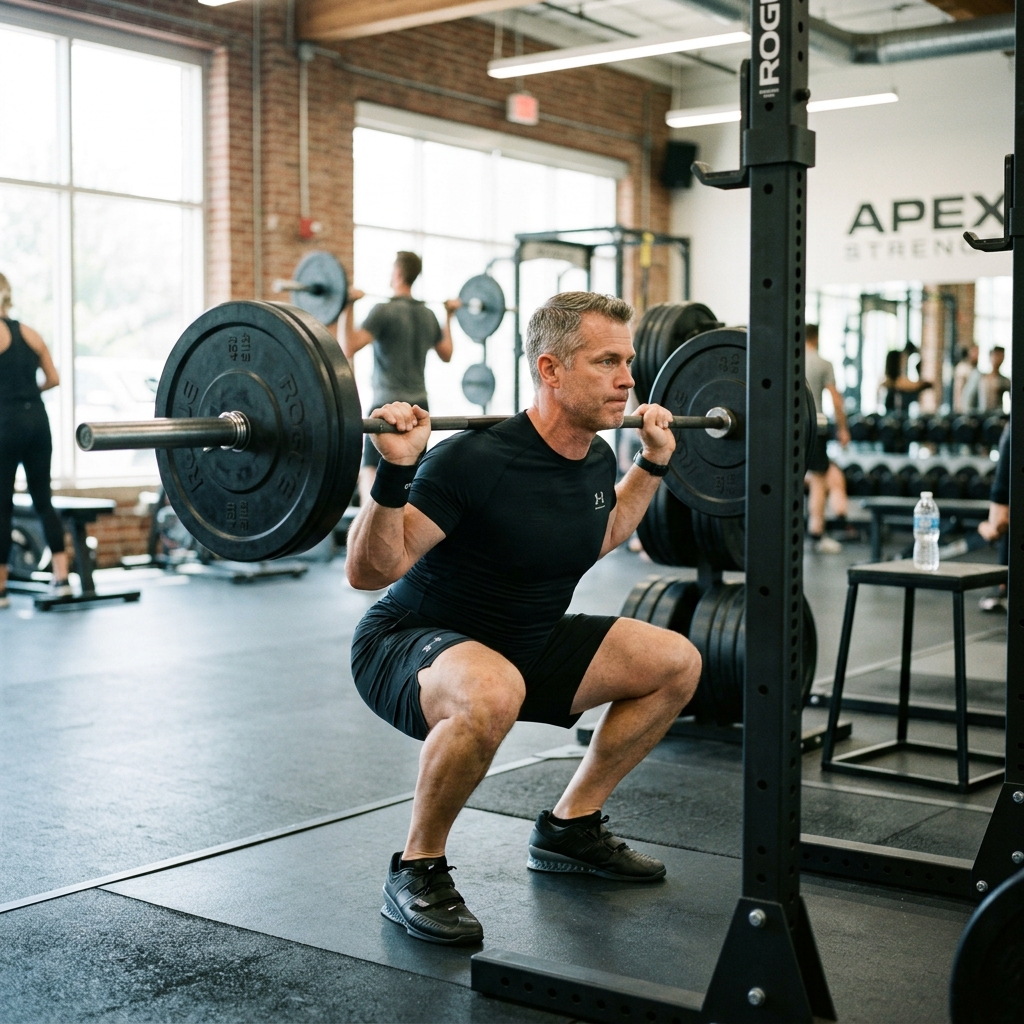
Strength training is the single most effective way to bulletproof your knees for hiking. Strong quadriceps, hamstrings, glutes, and calves absorb shock and stabilize the knee joint. Aim for two to three full-body strength sessions per week, focusing on the movements below.
Key Exercises for Knee-Friendly Hiking Strength
- Goblet Squats: Hold a dumbbell or kettlebell at your chest. Squat down as if sitting back into a chair. Keep your heels down and knees tracking over toes. 3 sets of 8–12 reps.
- Romanian Deadlifts: Hinge at the hips, keeping a slight bend in the knees. Lower the weight until you feel a stretch in your hamstrings, then drive back up. 3 sets of 10 reps.
- Step-Ups: Use a box or bench at knee height. Step up with one leg, driving through the heel, then step down slowly. This mimics hiking uphill and builds single-leg strength. 3 sets of 8–10 reps per leg.
- Lateral Band Walks: Place a resistance band around your thighs. Take small steps sideways, keeping tension on the band. This targets the gluteus medius, a key stabilizer for the knee. 3 sets of 15 steps each direction.
- Calf Raises: Stand on a step with heels hanging off. Rise up onto your toes, then lower slowly. Strong calves improve ankle stability and reduce knee stress. 3 sets of 15 reps.
Pro Tip: Always warm up with 5–10 minutes of light cardio and dynamic stretches before strength training. Cold muscles are more prone to injury.
Programming for Progress
Start with lighter weights and focus on form. Increase resistance gradually every two weeks. If you're new to strength training, consider working with a trainer to learn proper technique. For a deeper dive into injury prevention, check out our guide on how-to-prevent-workout-injuries-and-train-pain-free-after-40.
Cardiovascular Conditioning for the Trail
Hiking demands a strong aerobic base. You need to be able to climb for extended periods without gasping for air. But not all cardio is created equal when it comes to knee health. High-impact activities like running can aggravate knees, while low-impact options build fitness without the wear and tear.
Best Low-Impact Cardio for Hikers Over 40
- Incline Walking: Set a treadmill to a 10–15% incline and walk at a brisk pace. This mimics hiking uphill and builds quad and glute endurance.
- Cycling: Whether outdoors or on a stationary bike, cycling strengthens the quadriceps without pounding the knees. Keep resistance moderate and cadence steady.
- Elliptical Trainer: Provides a weight-bearing workout with minimal impact. Use the handles to engage your upper body.
- Swimming: A full-body workout that takes all stress off the joints. Great for recovery days.
Aim for 2–3 cardio sessions per week, lasting 30–45 minutes. If you're unsure whether to add cardio on rest days, read our article on is it okay to do cardio on rest days after 40.
Simulating Hiking Specificity
The best way to train for hiking is to hike. Start with shorter, flatter trails and gradually increase distance and elevation. If you live in a flat area, use a stair climber or find a parking garage to walk up and down. The descent is often harder on knees, so practice controlled downhill walking with a slight bend in the knees and a soft step.
Mobility and Flexibility: The Missing Link
Tight muscles restrict joint movement and alter biomechanics. After 40, connective tissue loses elasticity, making mobility work even more critical. Incorporate these practices into your routine.
Daily Mobility Drills
- Ankle Rocks: Kneel on one knee, other foot forward. Gently rock the front knee forward over the toes, keeping the heel down. 10–15 rocks per side.
- Hip Flexor Stretch: In a lunge position, tuck your pelvis and lean forward slightly until you feel a stretch in the front hip. Hold 30 seconds per side.
- Hamstring Stretch: Sit with one leg extended, reach for your toes. Hold 30 seconds per side.
- Quad Stretch: Standing, pull your heel toward your glutes. Hold 30 seconds per side.
Foam Rolling for Knee Health
Foam rolling the IT band, quadriceps, hamstrings, and calves can release tension that pulls on the knee. Spend 1–2 minutes per muscle group, avoiding rolling directly over the knee joint.
Nutrition and Recovery: Fueling Your Knees
What you eat directly impacts joint health and recovery. Chronic inflammation can accelerate cartilage breakdown, while proper nutrients support repair. Focus on an anti-inflammatory diet rich in omega-3s, antioxidants, and quality protein.
Key Nutrients for Joint Health
- Omega-3 Fatty Acids: Found in fatty fish, flaxseeds, and walnuts. Reduce inflammation and support joint lubrication.
- Vitamin D and Calcium: Essential for bone health. Get sun exposure and eat dairy or fortified foods.
- Collagen and Vitamin C: Collagen provides structure to cartilage; vitamin C aids synthesis. Consider a collagen supplement with vitamin C.
- Magnesium: Supports muscle relaxation and recovery. Many people over 40 are deficient. For a list of food sources, see our article on the best magnesium rich foods to eat before bed for muscle recovery over 40.
Protein for Muscle Repair
After 40, muscle protein synthesis declines. You need more protein to rebuild muscle after training. Aim for 1.6–2.2 grams per kilogram of body weight daily. Spread it evenly across meals. For a detailed guide, read How Much Protein Do You Need to Build Muscle Strength After 40?.
Supplements Worth Considering
Not all supplements are created equal. Some can genuinely support joint health and recovery. For a science-backed list, check out The 4 Daily Supplements Worth Your Money (And 3 You Should Stop Buying).
Pro Tip: Hydration is often overlooked. Dehydrated cartilage is more prone to friction and damage. Drink at least half your body weight in ounces of water daily, more on hiking days.
Step-by-Step Training Plan for Hiking After 40
Here's a sample 8-week plan to get you trail-ready without knee pain. Adjust based on your starting fitness level.
Weeks 1–2: Foundation
- Strength: 2 sessions per week (full-body, focus on form)
- Cardio: 2 sessions of incline walking or cycling, 30 minutes
- Mobility: Daily 10-minute routine
- Hike: 1 short, flat hike (30–45 minutes)
Weeks 3–4: Build
- Strength: 3 sessions per week (increase weight slightly)
- Cardio: 3 sessions, 35–40 minutes
- Mobility: Daily 10–15 minutes
- Hike: 1 hike with moderate elevation (1 hour)
Weeks 5–6: Intensify
- Strength: 3 sessions per week (add step-ups and lunges)
- Cardio: 3 sessions, 40–45 minutes, add intervals
- Mobility: Daily 15 minutes
- Hike: 1 longer hike with hills (1.5–2 hours)
Weeks 7–8: Peak
- Strength: 3 sessions per week (maintain weight)
- Cardio: 3 sessions, 45 minutes
- Mobility: Daily 15 minutes
- Hike: 1 hike simulating your goal (2–3 hours with elevation)
Always listen to your body. If knee pain flares, reduce volume and focus on recovery.
Conclusion: Your Knees Can Handle the Trail
Training for hiking after 40 without knee pain is not only possible—it's a smart, sustainable approach to staying active for decades. By building strength, improving mobility, fueling your body, and progressing gradually, you can enjoy the trails without sacrificing your joints.
Remember, consistency beats intensity. Small, consistent efforts in the gym and kitchen will pay off on the mountain. And if you're looking to optimize your overall health and longevity, explore our longevity-habits-for-men-over-40 guide.
Lace up your boots, hit the trail, and enjoy the view—your knees will thank you.